


At the start of January, Dr Amy Chadwick and Dr Emma Biglin began the second year of a research project funded by the Children’s Cancer Research Fund (aka Friends of Rosie) to explore the potential of proton beam therapy in treating paediatric cancers. Over the first year of this study, they made significant strides in their research, focusing on how cells respond to this advanced form of radiotherapy under low oxygen conditions and in combination with different drugs. We recently caught with up Amy to hear more about their objectives for the second year of the project and how it may help children with Ewing sarcoma, osteosarcoma and rhabdomyosarcoma in the future.

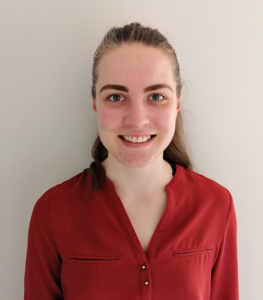
Explains Amy, “There’s a growing body of evidence to show how cells respond to proton therapy, but it’s largely in adult cancers or using adult cancer models. However, a large proportion of the patients that are treated with protons are paediatric patients or teenagers and young adults. Today, there is very little published research looking specifically at proton beam therapy in children. That’s why we’ve picked childhood cancer models that represent diseases that are currently treated with proton therapy or that could benefit from being treated with proton therapy. Our research looks at the difference in how cells respond to conventional radiotherapy using X-rays or proton beam therapy using protons.
“We also know that some of these tumours are quite resistant to radiotherapy. So, our project is focused on how we can combine other drugs or medicines with radiotherapy to see whether we can make it more effective. The long-term goal will be to increase the effectiveness of proton beam therapy or conventional radiotherapy in children with these cancers, while at the same time minimising the side effects.
Continues Amy, “On the run up to 2025, we’d already managed to conduct several experiments and gather valuable data which meant we were able to hit the ground running once the project formally commenced in January.
“Doing experiments using the proton beam differs significantly from conventional radiotherapy with X-rays. It is very precise and involves physics expertise. It’s critical to get the position of your samples right and we’re fortunate at the Proton Beam Therapy Centre to have a multidisciplinary team of biologists and physicists working in collaboration with us.”
Unique Research Facility
One of the unique aspects of Amy and Emma’s work is the dedicated research facility they have access to – The Proton Beam Therapy Centre at The Christie Hospital in Manchester. This facility, located within a clinical proton therapy treatment centre, allows them to conduct experiments in their dedicated proton therapy research facility, alongside clinicians who treat patients. This collaboration has been instrumental in identifying key research questions and maximizing their experimental output.
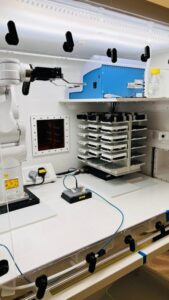
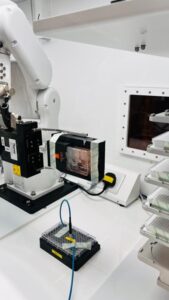 Continues Amy, “Conducting experiments with proton beam therapy is no easy feat. We can only access the proton beam during late evenings or at night when it is not being used for patient treatments. To make the most of this limited and expensive resource, we have developed infrastructure to maximize our throughput.
“This includes studying the impact of proton beam therapy under low oxygen conditions, termed hypoxia, which are common in solid tumours and can make them resistant to radiation. Most solid tumours will have some regions of hypoxia, and these regions are important for radiation because they are radio resistant. The presence of hypoxia in a tumour is a key predictor of poor outcome following radiotherapy in multiple tumour types. So, we were keen to study the impact of proton beam therapy under low oxygen conditions.”
In their first year, the team carried out high-throughput drug screening on 355 compounds in combination with proton beam therapy under hypoxic conditions. This leading-edge work has yielded promising results in year one, and we believe they are the only team in the world with this capability, making this research particularly significant.
Looking Ahead

As they move into their second year of research, Amy and Emma aim to validate the drug combinations they found to be effective. They will expand their research to different models and further understand how these combinations work.
Concludes Amy, “Our goal is to increase the effectiveness of proton beam therapy, with potential to decrease the dose of radiation to reduce the side effects for children with cancer. We’re already having discussions with other collaborators to look at the potential to translate our findings into real-world treatments that could benefit children with cancer. By the end of our second year, we aim to publish our work and secure larger grants to continue this pioneering research.”
This research has been made possible thanks to the donations of our supporters. A two-year study like this one costs around £150k and it’s only possible because of the various fun-runs, bake sales, raffles, donations, and corporate support from people up and down the country.


