icom_donate

Donate Today

icon_get_involved

Get Involved

icon_friend

Friends of

Proton Beam Therapy project gets funding for second year

The Children’s Cancer Research Fund is funding a second year of a vital research project investigating the biology of protons used in Proton Beam Therapy (PBT) to treat sarcomas in children. This will bring the grant total for this project to £140,000. Here lead researcher, Dr Amy Chadwick, and Research Associate, Dr Emma Biglin, tell us more about this pioneering research.

Radiotherapy (RT) is an essential component of curative paediatric cancer treatment. Proton beam therapy (PBT) uses high energy proton beams in place of conventional X-rays. The unique physical properties of protons means that protons stop at a precise depth in tissue, with no radiation dose delivered beyond.

As such, PBT can deliver a highly conformal radiation dose to a tumour, whilst dramatically reducing the volume of normal tissue irradiated, thus reducing the chance of toxicities and second cancers. This is particularly important in the paediatric setting, where developing normal tissues are more sensitive to radiation, which can result in long term complications of treatment, with some studies reporting up to 100% of patients developing radiation-induced late effects.
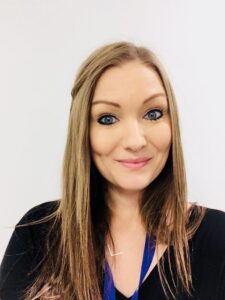
Amy Chadwick The Christie
Dr Amy Chadwick

Explains Dr Chadwick, “Understanding how tumour cells respond to PBT, particularly in regions of the tumour that are most radioresistant, would be a huge step towards being able to therapeutically exploit the understudied biology of protons and could fundamentally impact the use of PBT in the clinic. To date, no studies have reported any pre-clinical data in paediatric sarcoma models with PBT, despite PBT being such an important treatment option for these patients.

“The cellular response to PBT is understudied and this is compounded by limited access to both proton beam infrastructure and proton beam time. Proton beams are almost exclusively located within clinical hospital facilities or physics institutes, often without access to the equipment, facilities or expertise required to perform comprehensive biological experiments. This is why PBT radiobiology has been understudied, historically in non-clinically relevant models in low throughput. This is one reason why expertise from decades of clinical experience and pre-clinical research with conventional RT has simply been translated to PBT treatment by use of a simple weighting factor. We are uniquely positioned in Manchester with our dedicated PBT research facility, including bio lab and PBT radiobiology end station with accurate O2 control. This capability, with automation, is currently not available anywhere else in the world and puts us at a real advantage in carrying out experiments.

“Our project was ambitious, and we are incredibly pleased with the amount of data that we have been able to generate with this funding over the first year of the project, both in terms of understanding how paediatric sarcoma cells respond to PBT and by identifying potential therapeutic combinations that overcome treatment resistance. Both areas are critical to harness the full advantage of PBT to enable kinder and more effective treatment for children with cancer, identified as the top priority for children’s cancer research.

“In the second year of research, we now aim to further our current study to allow us to delve into the mechanisms behind the PBT-inhibitor combinations, such as a detailed understanding of DNA damage and repair and pathway changes in response to the combinations, working with collaborators to take the PBT combinations into more complex clinically relevant 3D models of paediatric sarcomas.

“We also propose to link with children’s cancer researchers at other centres across the UK to harness expertise and models for individual disease subtypes, potentially applying for pump-priming or seed funding via Cancer Research UK RadNet.”

Nancy Dykes

Nancy Dykes

Nancy, 11, was diagnosed with rhabdomyosarcoma when she was just 2 years old. She was treated with Proton Beam Therapy (PBT) in Germany but unfortunately relapsed less than a year later. The family were then sent to Germany for a second round of PBT. Although treatment helped to cure Nancy’s cancer, she has been left with lots of lasting effects which will require ongoing treatment throughout her life. Here Nancy and her mum, Antonia, share their story in the hope it will help others, raise awareness, and raise more money for children’s cancer research.

Prof John Hickman

Prof John Hickman

Why I am a Trustee of CCRF
 
I am a relative of the Larkin family and knew Rosie Larkin ( Friends of Rosie, now CCRF) when she had and then died of neuroblastoma, aged six. At that time, I was a scientist and professor at Manchester University, actively working on the problem of why some cancers do not die despite intensive and toxic therapies.  Seeing Rosie during her unsuccessful therapy and then attending her funeral, besides being emotional, drove me to double down on my own research as well as to support the Charity as best I could as a cancer researcher. I spent over a decade as the Chairman of the Scientific Advisory Board of the CCRF, when the Board moulded policies to ensure that funds raised for research into childhood cancers were distributed only to clinicians and researchers who had the brightest ideas that could impact of cancer medicine for children.
 
My role on the Board
 
As a Trustee,  I hope that my many decades of experience in cancer research and medicine can help the CCRF determine where best the funds that are raised can be invested in cutting edge research and medicine. I am also keen that the CCRF brings together UK and international experts in science and cancer medicine to brainstorm on how best to advance the treatment of childhood cancers.
 
My Background
 
I was a Professor of Pharmacology at Manchester University, working on drug resistance in cancer. I then moved to Paris, where I still live, to head cancer drug discovery at a French pharmaceutical company (Servier). I then headed an EU consortium for six years that brought together researchers from the pharmaceutical industry, universities and biotechnology companies, from all over Europe and the UK, to improve cancer drug discovery. I continue to be active in cancer health policy, publishing in the medical literature.
Katrina

Katrina London

Why I am a Trustee of CCRF

I have spent my professional career representing individuals and families affected by the devastating asbestos-related cancer, mesothelioma, which has no cure and for which there are only a limited number of palliative treatments available on the NHS.

I joined CCRF because I wanted to bring my understanding of the need to raise awareness of less well known cancers and passion for the need to secure improved funding for research to children facing a cancer diagnosis.

My role on the Board

I am responsible for oversight of our collaboration agreements with other charities to co-fund research into cures and treatments for childhood cancers. I also manage our challenge events and help with community fundraising. 

My Background

I am a Senior Associate at Irwin Mitchell LLP and specialise in Asbestos Disease Litigation, acting on behalf of victims of asbestos related diseases and their families.  Over the years, I have undertaken a number of fundraising challenges to raise money for cancer research, including a 1000 mile cycle ride from Glasgow to Southampton.   

Carla

Carla Nuttall

Why I’m a Trustee of CCRF
 
I became a trustee of the Children’s Cancer Research Fund because I believe every child deserves the chance to grow up healthy and with everything to look forward to in life. Like many people, I’ve seen the impact cancer can have on families and I wanted to do something that could make a real difference. This started through my work as an ambassador for Cyclists Fighting Cancer, which supported young people and their families in finding strength, confidence, and joy through movement.
 
That experience shaped my understanding of the challenges families face and the importance of community-led support – but crucially, the clear need for that to go hand-in-hand with targeted research and long-term solutions.
 
This is why I’m so passionate about the work CCRF does and proud to contribute to a cause that gives children and their families, the greatest chance of living a life without limits.
 
My Role on the Board
 
I support CCRF’s mission by bringing my experience in brand, marketing, and communications to the board. My focus is on helping CCRF tell its story in a way that resonates with people – whether that’s families, researchers, donors, or the wider public. I work alongside an incredible team to strengthen CCRF’s voice, build trust, and grow awareness so that more children and families can benefit from the breakthroughs we’re helping to fund.
 
My Background
 
I’m the Executive Director of Corporate Affairs and Marketing for The Growth Company, a social enterprise dedicated to helping people, businesses, and places to thrive through its market-leading insight, employment, skills and business support.
My passion is to help the organisations I work with to communicate with clarity, purpose, and integrity. That’s why I’ve spent my career in strategic communications supporting organisations that want to make a positive difference – CCRF could not fit my sense of purpose any better.