icom_donate

Donate Today

icon_get_involved

Get Involved

icon_friend

Friends of

Sarcoma awareness month

July is #SarcomaAwarenessMonth. Sarcomas are uncommon cancers that can affect any part of your body. A key symptom of sarcoma is a lump that gets bigger quickly.
 
This #CharityTuesday, as we near the end of the month, we wanted to share what we’ve been doing to help children with sarcomas.
Over the past three years, we’ve funded four different research projects focused on improving treatments or diagnosis for children with sarcomas.

Project 1 – Osteosarcoma

The first project researched how to slow the growth of bone cancer in children and stop it spreading. Through this project, researchers at The University of Manchester and the University of East Anglia made what may be the most significant step forward for children with one of the most common childhood cancers in 40 years.
Osteosarcoma is currently treated with a gruelling regime of outdated chemotherapy drugs and often limb amputation. But fewer than half the children survive more than five years. This is largely because bone cancer spreads rapidly around the growing body of a child, particularly to their lungs.The work, funded by Friends of Rosie at The University of Manchester, discovered that a protein called, MAPK7, controls the body’s immune response to tumours and by removing it researchers can slow the growth of osteosarcomas and prevent their spread to other parts of the body.

Project 2 – Ewing Sarcoma

For the second project, we’re partnering with The Bradley Lowery Foundation to fund new research into the detection and treatment of a rare type of childhood bone cancer, called Ewing Sarcoma.

The project is being led by Professor Caroline Dive, Director of the Cancer Research UK Manchester Institute at The University of Manchester, and Dr Martin McCabe, Clinical Senior Lecturer, Faculty of Biology, Medicine and Health at The University of Manchester.

The project is investigating the use of a blood sample to discover more about the tumour instead of taking an invasive tissue or tumour biopsy. This would be a far less aggressive procedure for children and could enable the earlier detection of relapse, as well as the improved monitoring of tumour response during treatment.

Project 3 – Facial disfiguration following radiotherapy
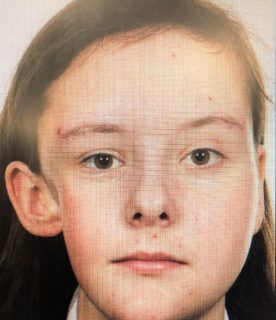
facial asymmetry
Emma was treated for rhabdomyosarcoma in her cheek.

The third project focuses on rhabdomyosarcoma and the risks of facial disfiguration following radiotherapy. Radiotherapy strongly affects bone and tissue growth, especially in children whose bones are still growing. Up to 75% of patients treated for head and neck rhabdomyosarcoma will experience some degree of facial underdevelopment resulting in marked facial disfiguration, which can affect quality of life.

This research project looks to understand, reduce, and even prevent side effects from radiotherapy for children with cancers in the face and neck.

Project 4 – Understanding the biology of Proton Beam Therapy for children with sarcomas

The fourth project is a grant of £70,000 to kickstart promising new research into the use of Proton Beam Therapy (PBT) to treat sarcomas in children.

The project is being led by researchers at The University of Manchester, with support from The Christie NHS Foundation Trust. They are investigating the biology of protons used in PBT to treat sarcomas in children.

The Friends of Rosie funding will allow the first steps in identifying new treatment combinations, which may ultimately make PBT more effective and kinder to children with sarcomas.


Help us continue to do more for children with sarcomas. By donating today, you can help us to find kinder, gentler, and more effective treatments for children with cancer. We also focus on quicker detection helping to improve the outlook and minimise the risks of relapse.

Be the difference. Donate today. 

Nancy Dykes

Nancy Dykes

Nancy, 11, was diagnosed with rhabdomyosarcoma when she was just 2 years old. She was treated with Proton Beam Therapy (PBT) in Germany but unfortunately relapsed less than a year later. The family were then sent to Germany for a second round of PBT. Although treatment helped to cure Nancy’s cancer, she has been left with lots of lasting effects which will require ongoing treatment throughout her life. Here Nancy and her mum, Antonia, share their story in the hope it will help others, raise awareness, and raise more money for children’s cancer research.

Prof John Hickman

Prof John Hickman

Why I am a Trustee of CCRF
 
I am a relative of the Larkin family and knew Rosie Larkin ( Friends of Rosie, now CCRF) when she had and then died of neuroblastoma, aged six. At that time, I was a scientist and professor at Manchester University, actively working on the problem of why some cancers do not die despite intensive and toxic therapies.  Seeing Rosie during her unsuccessful therapy and then attending her funeral, besides being emotional, drove me to double down on my own research as well as to support the Charity as best I could as a cancer researcher. I spent over a decade as the Chairman of the Scientific Advisory Board of the CCRF, when the Board moulded policies to ensure that funds raised for research into childhood cancers were distributed only to clinicians and researchers who had the brightest ideas that could impact of cancer medicine for children.
 
My role on the Board
 
As a Trustee,  I hope that my many decades of experience in cancer research and medicine can help the CCRF determine where best the funds that are raised can be invested in cutting edge research and medicine. I am also keen that the CCRF brings together UK and international experts in science and cancer medicine to brainstorm on how best to advance the treatment of childhood cancers.
 
My Background
 
I was a Professor of Pharmacology at Manchester University, working on drug resistance in cancer. I then moved to Paris, where I still live, to head cancer drug discovery at a French pharmaceutical company (Servier). I then headed an EU consortium for six years that brought together researchers from the pharmaceutical industry, universities and biotechnology companies, from all over Europe and the UK, to improve cancer drug discovery. I continue to be active in cancer health policy, publishing in the medical literature.
Katrina

Katrina London

Why I am a Trustee of CCRF

I have spent my professional career representing individuals and families affected by the devastating asbestos-related cancer, mesothelioma, which has no cure and for which there are only a limited number of palliative treatments available on the NHS.

I joined CCRF because I wanted to bring my understanding of the need to raise awareness of less well known cancers and passion for the need to secure improved funding for research to children facing a cancer diagnosis.

My role on the Board

I am responsible for oversight of our collaboration agreements with other charities to co-fund research into cures and treatments for childhood cancers. I also manage our challenge events and help with community fundraising. 

My Background

I am a Senior Associate at Irwin Mitchell LLP and specialise in Asbestos Disease Litigation, acting on behalf of victims of asbestos related diseases and their families.  Over the years, I have undertaken a number of fundraising challenges to raise money for cancer research, including a 1000 mile cycle ride from Glasgow to Southampton.   

Carla

Carla Nuttall

Why I’m a Trustee of CCRF
 
I became a trustee of the Children’s Cancer Research Fund because I believe every child deserves the chance to grow up healthy and with everything to look forward to in life. Like many people, I’ve seen the impact cancer can have on families and I wanted to do something that could make a real difference. This started through my work as an ambassador for Cyclists Fighting Cancer, which supported young people and their families in finding strength, confidence, and joy through movement.
 
That experience shaped my understanding of the challenges families face and the importance of community-led support – but crucially, the clear need for that to go hand-in-hand with targeted research and long-term solutions.
 
This is why I’m so passionate about the work CCRF does and proud to contribute to a cause that gives children and their families, the greatest chance of living a life without limits.
 
My Role on the Board
 
I support CCRF’s mission by bringing my experience in brand, marketing, and communications to the board. My focus is on helping CCRF tell its story in a way that resonates with people – whether that’s families, researchers, donors, or the wider public. I work alongside an incredible team to strengthen CCRF’s voice, build trust, and grow awareness so that more children and families can benefit from the breakthroughs we’re helping to fund.
 
My Background
 
I’m the Executive Director of Corporate Affairs and Marketing for The Growth Company, a social enterprise dedicated to helping people, businesses, and places to thrive through its market-leading insight, employment, skills and business support.
My passion is to help the organisations I work with to communicate with clarity, purpose, and integrity. That’s why I’ve spent my career in strategic communications supporting organisations that want to make a positive difference – CCRF could not fit my sense of purpose any better.