


Friends of Rosie, now known as the Children’s Cancer Research Fund (CCRF), runs an international research symposium in alternate years. In September 2024, over 40 people gathered together in Manchester for the two-day scientific events titled, Theragnostics for neuroblastoma: making molecular radiotherapy work better. Here our Scientific Advisory Board Chair, Dr Mark Gaze, shares a summary of the day and what it has achieved.
The high-risk form of neuroblastoma is a cancer of unmet need, as despite improvements in outcome in recent years, around half of those affected die of this cruel disease. Radioactive drugs have an established place in both the diagnosis (nuclear medicine scanning) and treatment (molecular radiotherapy) of neuroblastoma. The word theragnostics unites these two things, which in a way are like two sides of a coin.
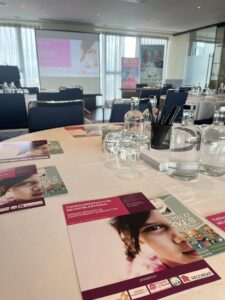
The symposium attracted a wide range of individuals, including paediatric oncologists, nuclear medicine physicians, clinical scientists, radiologists, therapy radiographers, cellular, molecular and radiation biologists, surgeons, and importantly, parents of children with neuroblastoma. They came not just from the United Kingdom, but also the United States, Sweden, France and the Netherlands. In turn, they presented the state of the art in their field of expertise, discussed how concepts presently in research might be introduced into everyday practice, and what clinical trials might evaluate innovative approaches to refine and improve treatments. Networking and informal conversations continued in refreshment breaks and in the evening. New friends were made, and new collaborations started.
There is some real progress this side of the horizon. Two new clinical trials of molecular radiotherapy for children with neuroblastoma are expected to start recruiting patients in the UK in 2025. One is MINT, a trial to see whether the addition of a drug called talazoparib can enhance the efficacy of iodine-131 meta iodobenzylguanidine (mIBG). The other is LuDO-N, a trial to see whether a more dose intense schedule of administration of lutetium-177 DOTATATE (LuDO) has better results than the less intense schedule evaluated previously.
Slightly further in the distance, it is hoped that the development of a novel imaging radiopharmaceutical iodine-124 mIBG, used with the new generation of high sensitivity scanners being installed presently in a few UK centres, will allow refinement and optimisation of mIBG therapy. Much work is underway to take this forward, and it is hoped that a trial may start in 2026.
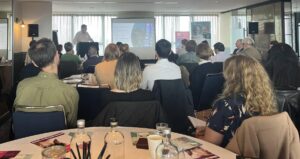 By bringing together scientists and clinicians from different but inter-related disciplines, and linking together key players from different countries, the symposium has facilitated development work on these three projects. We anticipate they will be run internationally, thereby bringing forward the completion date of each, for the benefit of children with neuroblastoma.
A detailed report has now been published in the high-impact factor American Journal of Nuclear Medicine. If you want to read more detail, you can find it at: https://doi.org/10.2967/jnumed.124.269121
Professor Mark Gaze
Chairman, CCRF Scientific Advisory Board


