icom_donate

Donate Today

icon_get_involved

Get Involved

icon_friend

Friends of

Jude’s Story

Jude Anderton was 11 years old when he was diagnosed with bone cancer. He went from a happy, highly active boy to being desperately ill in such a short space of time. His mum, Helen, shares his story to help raise awareness for childhood bone cancer and the vital need for more research:

“I remember it was the same week as Valentine’s Day when Jude first complained of arm pain. He was a super active 11-year-old boy who loved gymnastics and swimming. As the eldest of four boys, he set the standard for the others and enjoyed competing in sports. He came home from school and said he hadn’t thrown the ball well that day and couldn’t understand why. He also said his arm was feeling achy.

“We left it for a week or so, but Jude was still complaining of aches and pains in his arm. We went to see the GP who thought it could be a strain and advised rest and paracetamol for a couple of weeks. However, the pain very quickly became excruciating with swelling in his arm. He stopped eating and couldn’t sleep so we took him to the local walk-in centre. The GP who saw him was concerned and sent us to the children’s hospital for an X-ray.
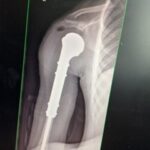
“Being a nurse, I’ve seen plenty of X-rays and from the other side of the screen, even I could see a huge mass on Jude’s arm. The A&E consultant said that he thought it could be bone cancer, but we would need a CT scan, MRI, and biopsy. After those tests, it was confirmed, and we were told the cancer had already spread to Jude’s lungs. He had 30 deposits on his lungs and the tumour in his arm was 15cm.

Treatment began

“Everything moved very quickly from then. The oncologist said that Jude’s treatment would be exceedingly difficult and gruelling. He may need an amputation and his cancer would be difficult to cure.

“In my job I’ve treated adult cancer patients, so I knew what treatment was like, but I’ve never seen anything like this. The treatment was horrific. Jude quickly lost his hair. His mouth was full of ulcers, in fact, I wouldn’t even call them ulcers. The inside of his mouth and tongue were covered with blisters and he had to have IV morphine for the pain. He couldn’t walk, couldn’t eat, and had to have an Ng tube to feed.

“The network on the ward at Manchester Children’s Hospital was amazing. The kids are so sick they haven’t even the energy to make friends, but for the parents the support was invaluable.

“Jude went through two rounds of chemotherapy and was most worried about the thought of losing his arm. We went down to Birmingham Children’s Hospital for his surgery. The tumour took seven hours to operate on but they managed to save his arm and Jude was over the moon. He really took to the physio and even started talking about the Paralympics. He even did some fundraising for the Bone Cancer Research Trust raising a huge £176,000 making hama bracelets and encouraging others to fundraise.

“After his end of treatment scans, they thought they had cleared his arm and said Jude could have Christmas off. The cancer hadn’t reduced in his lungs, but the focus was on the tumour in his arm for the time being and the lungs would be tackled later. There were still lots of uncertainties.

The cancer was back

“But Jude’s arm pain returned, and his arm and hand started to swell. We went for another scan and it was all back. The cancer had grown in his arm and his lungs. We were devastated. It was then we were told that they wouldn’t be able to cure Jude.

“We started on a trial at Birmingham Children’s Hospital. He coped well with the first two cycles but on the third cycle, he was just too ill. The consultant said the cancer was just too aggressive and they couldn’t get on top of it.

“We were able to take Jude home with the support of the Macmillan team. The tumour on his arm was just huge. I’ve never seen anything like it. It was as if it was taking over his body. He had two syringe drivers for pain relief and was on oxygen because his pain was so severe.
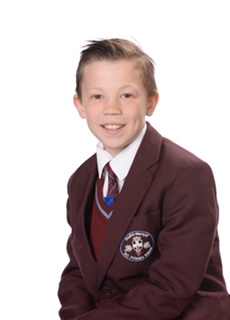
“At the end of his treatment, we bought a puppy and, just four days before he died, he still insisted on going out in his wheelchair to take the puppy for a walk. “

Jude died, aged 12, at home with his family on 28th February 2018.

“He was a real trailblazer and even at such a young age, he was passionate about raising awareness and making a change. What he went through was horrific. There has to be a way to give children gentler, less gruelling treatments. He received the same treatment for bone cancer as children in the 1970s. Treatment hasn’t moved on or improved for 40 years. That’s just not good enough.

“His younger brother, Finlay, said, “I wasn’t made to be the biggest brother. I was meant to follow Jude.”

Please donate today to help other children like Jude. We fund research into gentler, more effective treatments for childhood cancer. Please help us do more.
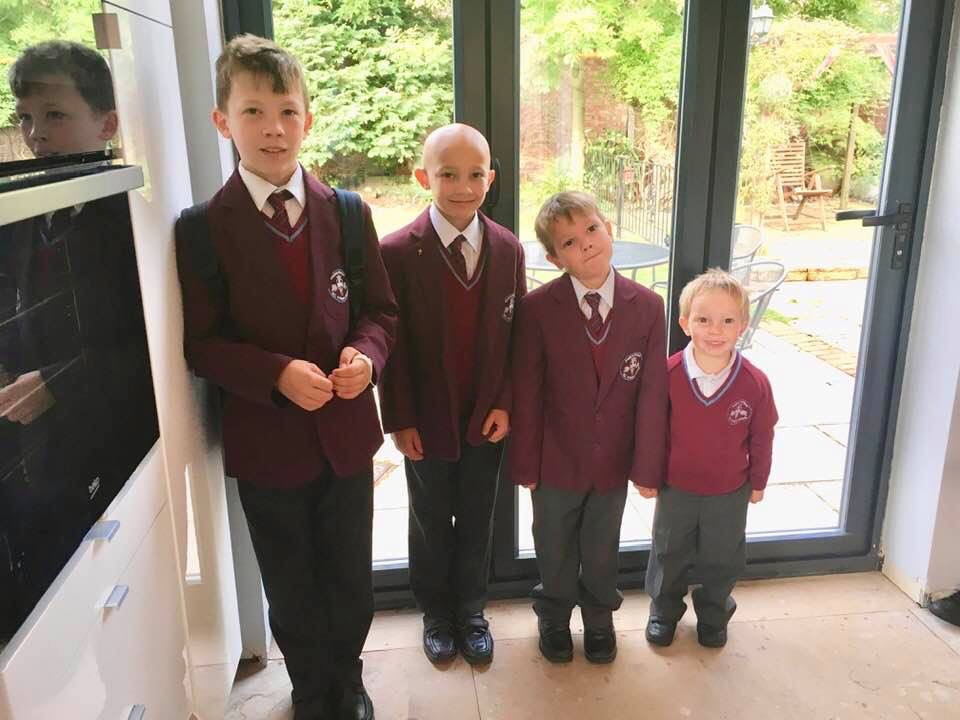
Jude with his brothers
Nancy Dykes

Nancy Dykes

Nancy, 11, was diagnosed with rhabdomyosarcoma when she was just 2 years old. She was treated with Proton Beam Therapy (PBT) in Germany but unfortunately relapsed less than a year later. The family were then sent to Germany for a second round of PBT. Although treatment helped to cure Nancy’s cancer, she has been left with lots of lasting effects which will require ongoing treatment throughout her life. Here Nancy and her mum, Antonia, share their story in the hope it will help others, raise awareness, and raise more money for children’s cancer research.

Prof John Hickman

Prof John Hickman

Why I am a Trustee of CCRF
 
I am a relative of the Larkin family and knew Rosie Larkin ( Friends of Rosie, now CCRF) when she had and then died of neuroblastoma, aged six. At that time, I was a scientist and professor at Manchester University, actively working on the problem of why some cancers do not die despite intensive and toxic therapies.  Seeing Rosie during her unsuccessful therapy and then attending her funeral, besides being emotional, drove me to double down on my own research as well as to support the Charity as best I could as a cancer researcher. I spent over a decade as the Chairman of the Scientific Advisory Board of the CCRF, when the Board moulded policies to ensure that funds raised for research into childhood cancers were distributed only to clinicians and researchers who had the brightest ideas that could impact of cancer medicine for children.
 
My role on the Board
 
As a Trustee,  I hope that my many decades of experience in cancer research and medicine can help the CCRF determine where best the funds that are raised can be invested in cutting edge research and medicine. I am also keen that the CCRF brings together UK and international experts in science and cancer medicine to brainstorm on how best to advance the treatment of childhood cancers.
 
My Background
 
I was a Professor of Pharmacology at Manchester University, working on drug resistance in cancer. I then moved to Paris, where I still live, to head cancer drug discovery at a French pharmaceutical company (Servier). I then headed an EU consortium for six years that brought together researchers from the pharmaceutical industry, universities and biotechnology companies, from all over Europe and the UK, to improve cancer drug discovery. I continue to be active in cancer health policy, publishing in the medical literature.
Katrina

Katrina London

Why I am a Trustee of CCRF

I have spent my professional career representing individuals and families affected by the devastating asbestos-related cancer, mesothelioma, which has no cure and for which there are only a limited number of palliative treatments available on the NHS.

I joined CCRF because I wanted to bring my understanding of the need to raise awareness of less well known cancers and passion for the need to secure improved funding for research to children facing a cancer diagnosis.

My role on the Board

I am responsible for oversight of our collaboration agreements with other charities to co-fund research into cures and treatments for childhood cancers. I also manage our challenge events and help with community fundraising. 

My Background

I am a Senior Associate at Irwin Mitchell LLP and specialise in Asbestos Disease Litigation, acting on behalf of victims of asbestos related diseases and their families.  Over the years, I have undertaken a number of fundraising challenges to raise money for cancer research, including a 1000 mile cycle ride from Glasgow to Southampton.   

Carla

Carla Nuttall

Why I’m a Trustee of CCRF
 
I became a trustee of the Children’s Cancer Research Fund because I believe every child deserves the chance to grow up healthy and with everything to look forward to in life. Like many people, I’ve seen the impact cancer can have on families and I wanted to do something that could make a real difference. This started through my work as an ambassador for Cyclists Fighting Cancer, which supported young people and their families in finding strength, confidence, and joy through movement.
 
That experience shaped my understanding of the challenges families face and the importance of community-led support – but crucially, the clear need for that to go hand-in-hand with targeted research and long-term solutions.
 
This is why I’m so passionate about the work CCRF does and proud to contribute to a cause that gives children and their families, the greatest chance of living a life without limits.
 
My Role on the Board
 
I support CCRF’s mission by bringing my experience in brand, marketing, and communications to the board. My focus is on helping CCRF tell its story in a way that resonates with people – whether that’s families, researchers, donors, or the wider public. I work alongside an incredible team to strengthen CCRF’s voice, build trust, and grow awareness so that more children and families can benefit from the breakthroughs we’re helping to fund.
 
My Background
 
I’m the Executive Director of Corporate Affairs and Marketing for The Growth Company, a social enterprise dedicated to helping people, businesses, and places to thrive through its market-leading insight, employment, skills and business support.
My passion is to help the organisations I work with to communicate with clarity, purpose, and integrity. That’s why I’ve spent my career in strategic communications supporting organisations that want to make a positive difference – CCRF could not fit my sense of purpose any better.