
Home » Our Research Projects
It is our primary aim to fund the most promising new childhood cancer research ideas in the North West. As a result of our funding researchers are able to obtain preliminary results to back up their ideas, which they can then use to secure large-scale funding from the big cancer research charities and pharmaceutical companies.
Each year, we ask medical and scientific institutions to apply to us for grants to fund their research ideas. These applications are then verified by our independent Scientific Advisory Board, who make recommendations as to which projects are most promising and should receive our funding. We typically fund one to two years of initial research.

The average cost of a research project is £70,000 for one year.
Whilst our research is conducted in the North West of England, our beneficiaries are children with cancer all over the world. The research projects that we help to get off the ground can lead to critical breakthroughs in our global understanding of childhood cancer and a step change in the way children with cancer are diagnosed and treated.
Research projects that we started have gone on to be funded by the likes of Cancer Research UK and the Department for Health, and have led to international research partnerships between the UK, Canada and the US.
£2.75 million over 25 years
Since the Children’s Cancer Research Fund (aka Friends of Rosie) was formed in 1991, we have funded 28 research projects in the North West of England. This research has focused on different ways in which to improve the treatment and outlook for children with cancer.
In financial terms, that’s around £2.75 million worth of funding, raised and donated by our amazing supporters.
Here’s the full list of projects that we have proudly funded:
To identify and isolate genes important in the initiation and progression of childhood solid tumours with a focus on Wilms tumour – kidney cancer in children.
Dr Paul Hoban & Dr Anna Kelsey (1993)
The use of radiation activated gene therapy as a novel method of cancer treatment*.
Dr B Marples, Paterson Institute Manchester, London, Toronto, USA. (1996)
*This research went on to attract long term funding at Mount Vernon Hospital, Middlesex (2001)
The way in which cells from cancers of the nervous system (neuroblastoma) manage to evade being killed by cytotoxic drugs
Prof Tim Eden, Prof John Hickman and Dr Christine Cresta, University of Manchester (1996)
Risk factors for the development of the child and family in the nine months following the diagnosis of childhood cancer
Prof Hill (Alder Hay Children’s Hospital), Dr Mackie and Prof Eden (RMCH) (1997)
Protection of bone marrow cells against the damaging effects of cytotoxic drugs, using gene therapy.
Dr J Rafferty, Paterson Institute. (1998)
A comparison of the frequency of unusual inherited mutations in the families of children with cancer as compared with their frequency in control families.*
Dr M Taylor, St Mary’s Hospital. (1998)
*Dr M Taylor received a grant from the Department of Health to extend his work on unusual mutations in children with cancer (2003)
A study of the timing of drug administration, with the aim of preventing damage to normal cells, while still killing cancer cells.
Dr H Robson, Christie Hospital. (1998)
An investigation of whether damage to a particular gene, called MLL, is associated with the occurrence of rare cases of leukaemia caused by the treatment of a previous cancer.
Dr A Ng, Christie Hospital. (1999)
A long term comparison of the possible damaging effects on the density of bone in children, cured of cancer, which has been treated by different methods.
Dr B Brennan, Manchester University and Royal Manchester Children’s Hospital. (1999)
Using data from the Manchester Children’s Tumour Registry to determine the relative importance of genetic and environmental factors in the causation of lymph gland cancer in children.
Professor J Birch, Royal Manchester Children’s Hospital. (1999)
A study of multiple gene therapy to protect bone marrow cells from the potential damaging effect on normal cells of cancer treatment that uses more than one drug.*
Dr L Fairbairn, Paterson Institute. (1999)
*Dr L Fairburn secured further funding with a view to clinical trials of bone marrow protection in the future. (2001)
Establishment of a research database for kidney cancers in children.
Dr R McNally, Royal Manchester Children’s Hospital. (2001)
An investigation of the mechanism by which the drug asparaginase exerts its effect, with the aim of enabling this important drug to be used more effectively in the treatment of children with cancer.
Dr E J Estlin, Royal Manchester Children’s Hospital and Salford University. (2002)
A comparison of the early stages in the development of the blood cells of children with Down’s Syndrome and those of control children, in order to understand why some children with Down’s Syndrome develop leukaemia.
Dr R Wynn, Royal Manchester Children’s Hospital. (2004)
The effects of hypoxia on drug-induced Apoptosis in neuroblastoma.
Dr Makin – University of Manchester (2006)
Study of biochemical changes which occur within single cells.
Prof M White – University of Liverpool (2006 )
Gene activity in childhood brain tumours.
Dr Stephen Meyer – University of Manchester (2008)
Studies on an inherited cancer susceptibility.
Prof A Whetton – University of Manchester (2010)
Hypoxia-induced drug resistance in Osteocarcoma.
Dr J Adamski and Dr G Makin, University of Manchester (2011)
How changes in the genetic code of medulloblastoma cells result in tumour growth and treatment resistance.
Dr Martin McCabe, University of Manchester (2012)
The consequences of childhood brain tumours and their treatment with cranial radiotherapy.
Dr Estlin (RMCH) & Prof Daniela Montaldi, University of Manchester (2012)
Proton Beam Therapy to treat sarcomas in children
Dr Amy Chadwick, University of Manchester & Prof Karen Kirkby, University of Manchester and The Christie (2021)
Develop blood-based biomarker tests for children with high-risk neuroblastoma Professor Louis Chesler, The Institute of Cancer Research – cofunded with Neuroblastoma UK (2022)
The development of a reliable diagnostic blood test to diagnose Ewing Sarcoma. Professor Caroline Dive, CRUK Manchester Institute, University of Manchester, Dr Martin McCabe & Dr Dominic Rothwell, University of Manchester & Professor Sue Burchill, University of Leeds (2022 – ongoing)
Investigating ways to decrease the risk of facial disfiguration in children with cancers in the head and neck. Dr Marianne Aznar & Dr Gillian Whitfield, University of Manchester & The Christie (2021)
More Coming Soon!
© 2025 Children’s Cancer Research Fund | Charity No. 1046278 | Website by ATTAIN.
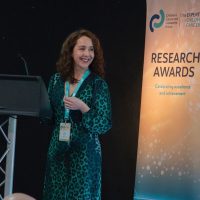
Lorna is Senior Research Fellow & Patient Engagement Lead at the CCLG TYA Research Centre. She is also a Director at the University College London Hospitals NHS Foundation Trust.
Lorna is an internationally recognised leader in teenage and young adult oncology, with 20 years’ research experience across academic, industry, clinical and healthcare settings. She has led a diverse research and development portfolio. Her expertise includes early diagnosis and detection, research and innovation, inequalities in access to care and research, and patient engagement. A member of the Department of Health and Social Care Children’s and Young Persons Advisory Task Force, Lorna chairs national multi-stakeholder and patient initiatives and is an invited keynote speaker, media contributor and parliamentary presenter.

Nancy, 11, was diagnosed with rhabdomyosarcoma when she was just 2 years old. She was treated with Proton Beam Therapy (PBT) in Germany but unfortunately relapsed less than a year later. The family were then sent to Germany for a second round of PBT. Although treatment helped to cure Nancy’s cancer, she has been left with lots of lasting effects which will require ongoing treatment throughout her life. Here Nancy and her mum, Antonia, share their story in the hope it will help others, raise awareness, and raise more money for children’s cancer research.


Why I am a Trustee of CCRF
I have spent my professional career representing individuals and families affected by the devastating asbestos-related cancer, mesothelioma, which has no cure and for which there are only a limited number of palliative treatments available on the NHS.
I joined CCRF because I wanted to bring my understanding of the need to raise awareness of less well known cancers and passion for the need to secure improved funding for research to children facing a cancer diagnosis.
My role on the Board
I am responsible for oversight of our collaboration agreements with other charities to co-fund research into cures and treatments for childhood cancers. I also manage our challenge events and help with community fundraising.
My Background
I am a Senior Associate at Irwin Mitchell LLP and specialise in Asbestos Disease Litigation, acting on behalf of victims of asbestos related diseases and their families. Over the years, I have undertaken a number of fundraising challenges to raise money for cancer research, including a 1000 mile cycle ride from Glasgow to Southampton.


