Paddy’s imagination helped create an adventure across space. His experience of cancer shows why children urgently need treatments that are both more effective and less damaging.
An adventure imagined by Paddy
Paddy designed Grubble Grobble, a comic for Macrium about a missing Grandma and a rescue mission across space. It is a story full of imagination, adventure and the kind of big ideas that only a young creator can bring. We are hugely grateful to Paddy for sharing his world with us, and to Macrium for supporting the collaboration and helping turn his concept into a comic he can hold, share and be proud of.
A journey that changed everything
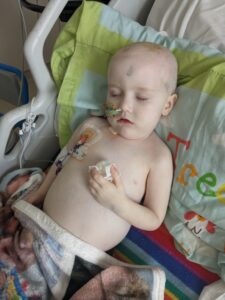 Paddy was three when he was diagnosed with Acute Lymphoblastic Leukaemia. His family was suddenly plunged into a frightening new world of treatment, uncertainty and repeated complications. During treatment, Paddy experienced serious infections, septic shock, steroid-induced psychosis and a chemotherapy-induced stroke. The stroke caused lasting neurological damage and continues to affect his mobility, spine and day-to-day care.
For Paddy’s family, diagnosis marked the beginning of a journey that did not simply end when treatment finished. Childhood was interrupted by hospital stays, painful procedures and medical trauma. Paddy’s mother describes the deep bonds formed with other families on the ward as “friendships forged in battle”—a source of love and support within an experience no family should have to face.
Paddy today
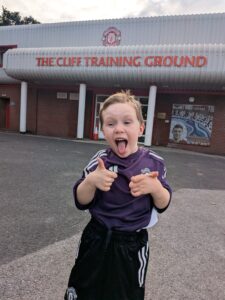 Having rung the bell, Paddy is embracing the activities he loves. He plays for Manchester United’s pan-disability football programme, reads and writes beautifully, and enjoys climbing, cycling, scootering, gymnastics and swimming. His family describes him as thoughtful, articulate and determined not to let disability prevent him from taking part. At the same time, he continues to need specialist care for the long-term effects of treatment, including severe scoliosis and weakness on the left side of his body.
Why dedicated research matters
Paddy’s story shows why survival statistics alone cannot tell the whole story. A treatment may save a child’s life while also leaving lasting physical, neurological and emotional effects. Children need therapies developed specifically for their growing bodies—treatments that are more precise, less toxic and less likely to cause lifelong harm.
 Dedicated childhood cancer research can help improve survival, reduce side effects and give children a better quality of life during and after treatment. By supporting this work, you can help researchers develop kinder and more effective options for children like Paddy and for every family facing a childhood cancer diagnosis.